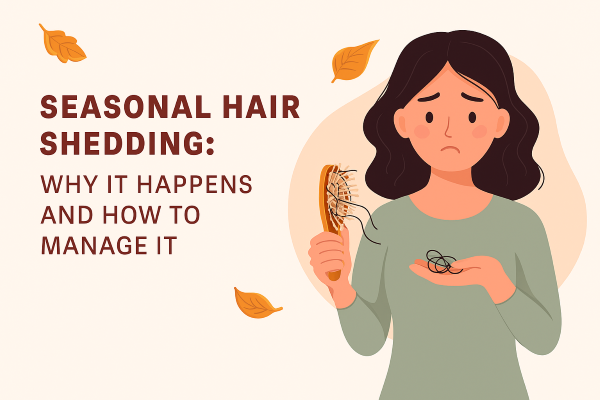
Do you notice more hair in your brush or on your pillow during certain times of the year? Don’t worry — it’s completely normal. Seasonal hair shedding is a natural part of the hair growth cycle, and understanding it can help you manage it effectively and keep your hair looking full and healthy.
What Is Seasonal Hair Shedding?
Our hair goes through three major phases:
Anagen (Growth Phase) – Hair grows actively from the follicle.
Catagen (Transition Phase) – Hair stops growing and prepares to shed.
Telogen (Resting Phase) – Old hair falls out, and new hair begins to grow.
During autumn and spring, more hairs tend to enter the telogen phase — leading to increased shedding. This can be triggered by weather changes, hormonal fluctuations, and stress, making it appear like sudden hair fall.
Common Causes of Seasonal Hair Shedding
Weather Changes – Cold winters and hot summers can dry out the scalp and weaken hair strands.
Nutrient Deficiency – Lack of vitamins such as Biotin, Vitamin D, and Iron affects follicle strength.
Hormonal Shifts – Changes in hormones due to seasonal patterns may influence hair growth.
Stress & Lifestyle – Sleep irregularities and mental stress can worsen temporary hair fall.
How to Manage Seasonal Hair Shedding
While seasonal hair shedding is temporary, proper care can minimize its impact and improve regrowth.
1. Maintain a Nutrient-Rich Diet
Consume foods high in protein, omega-3 fatty acids, zinc, and vitamins B, C, and D. Hydration is also key to maintaining scalp health.
2. Use Gentle Hair Products
Choose sulfate-free shampoos and natural oils like coconut or argan oil. Avoid over-washing or harsh treatments that damage follicles.
3. Massage Your Scalp
A 5-minute daily scalp massage increases blood circulation, encouraging hair follicles to produce thicker strands.
4. Manage Stress
Try yoga, meditation, or light exercise to balance stress hormones that affect the hair growth cycle.
5. Seek Professional Care
If hair fall persists beyond a few months, consult experts at Radiance Hair Transplant Center.
We offer advanced solutions such as:
PRP Therapy (Platelet-Rich Plasma) for stimulating natural hair growth.
Hair Transplant Procedures for long-lasting, fuller hair results.
When Should You Worry About Hair Shedding?
Losing 50–100 hairs a day is considered normal. However, if you notice:
Widening part lines
Visible scalp areas
Continuous heavy shedding for over 3 months
…it’s best to get a professional hair evaluation to rule out underlying conditions like alopecia or nutritional deficiencies.
Final Thoughts
Seasonal hair shedding is temporary and natural, but consistent care makes a lasting difference. By maintaining a healthy lifestyle, using gentle products, and seeking professional guidance when needed, you can enjoy stronger, shinier, and healthier hair all year long.
At Radiance Hair Transplant Center, we specialize in hair restoration, PRP therapy, and advanced transplant techniques — helping you regain your hair and your confidence.